Sunday, April 24, 2016

Inside the Beast

One day every year the legendary Pražký Hrad is opened up to the public and visitors are given free access to roam about the innards of the fortress...in a selective, supervised, and specific way, of course. The day this year was yesterday, April 24th, and I was lucky enough to be able to sneak in. What looked to be quite the daunting line, in effect turning quite a few potential wanderers away, actually moved very quickly and we were passing through entryway metal detectors within 15 minutes. This may still seem largely unimpressive to some readers and still like quite the wait, but for those of you who have ever been to Prague and tried to cross the Charles Bridge during midday when the weather is nice, you know why a mere quarter of an hour is an impressive feat! The point is during at least 4/5 of the year the tourists in Prague's Old Town, Charles Bridge, and castle make the fruit flies present on a week-old banana sitting on a porch in southern Mississippi look lazy.

Long story short, we were able to swat our way into the castle to take a peek at the secrets held within. We were able to see many areas that are not normally open to the public, including the Rothmayer Hall (another famous Czech architect), the Spanish Hall, the Throne Room, the Hapsburg Drawing Room, and the Rudolph galleries and rooms on the southern wing of the New Palace. I must say that I am glad to have done it and to be able to say that I have been inside the castle. The vast majority of the 'tour' proved the rooms to be very stark and less maintained than one might expect. However, other areas/sections of the castle are more permanently open to the public (at a price) and as a result these might be the areas that are more heavily renovated, furnished, and kept up. Not to take TOO much away from the sections seen...it was undoubtedly a house fit for a king!

Queuing up like peasants...


Security, security, security

Entrance chamber


Rothmayer Hall 

Entering the Spanish Hall


A view of Prague from the south gardens


Sunday, April 17, 2016

Spanks and Springtime

What would you do for a hard-boiled egg? If you were a patient Czech or Slovakian you might wait until Easter and then spank your wife with a woven willow switch until she gave you one...or your neighbor's wife...or any female in the vicinity. If you were really hungry or passionate about the upholding of traditions you might do all three!

The reaction of foreigners to this Easter tradition often ranges from being mildly taken aback to being left absolutely incredulous and aghast. The idea of "beating" women (contact should be on the rear and the legs) for Easter often seems like a slightly inappropriate form of celebration in the eyes of those used to the heavily religious overtones of the holiday that exist in most countries. Ale, to je život, český život. 

The tradition is thought to come from ancient pagan traditions and is a symbolic fertility ritual. Nowadays, the whipping is commonly explained as being meant to keep the woman from aging an to help her preserve her youth. Woven willow switches, called pomlázkas, are used and were often used in ancient times to fend off evil. Present-day traditions vary slightly depending on where you are, but it is often common for the 'spanking' to happen in the morning (a nice way to wake up on a Monday morning). This is followed by an afternoon period of redemption, as the women are able to douse the men with water. 

I will not go into more detail, but here is a great interview from Radio Prague that gives a much more comprehensive account of all of the Easter traditions and their origins. 

However, some of the other traditions include blown eggs (similar to the ones Poland is so famous for), Easter markets (which look amazingly similar to the Christmas ones, just with a different tree and decorations), and an assortment of traditional sweets and breads. 

Speaking of Easter, spring is finally awakening here in the Czech Republic and it is absolutely gorgeous! Warmer weather and more sunshine. The scenery merits a post of its own, but I have decided to include a few photos that I have taken so far. Enjoy! 

The always beautiful Náměstí Míru


The infamous pomlázka...found at the school
after an Easter party


One of the big shopping centers
had an Easter exhibit with
various eggs, each sporting a
different theme

Humpty-Dumpty-esque

Masquer-egging  


What better time to graze your horses than a warm spring day? What better
place than your local high-rise apartment complex?


Many Czechs have gardens and take much pride in them. This is an especially
impressive one I saw in a neighborhood where I teach


Wednesday, March 30, 2016

Post-Brussels Burdens

Many people stateside have been asking me what the scene over here looks like in the wake of recent terrorist attacks in Europe (e.g. Paris, Brussels). I would begin by saying that I don't think the Czech Republic has been effected by happenings as much as other countries, as it is not as big of a 'thoroughfare' or 'target' country. Many internationals don't know it exists (especially non-European internationals) and as a result less of them travel through or to it. If they do find themselves in this magical, strange, and unexpectedly xenophobic land it is often during a brief layover on the way to Germany or Austria. Consequently, it seems Prague is also a little lower down on the terrorist radar; as it doesn't harbor any internationally or EU-wise vital buildings or offices.

However, regardless of what reality may or may not suggest, Hlavní Město Praha is dutifully making some changes to ensure its residents and the international community that it is fully prepared for what may or may not happen. Security has been increased around the city, with military police armed with automatic weapons becoming a common sight. Airport lines may be a little longer. More 'normal' policeman can be seen making the rounds.

A second (unfortunate) result of recent attacks has been a fueling of the xenophobic fire that burns remarkably brightly here in the capital city. As is the case many places (including the U.S.), these attacks have served as a springboard for anti-immigration and anti-Islam rallies. As you may recall from a couple posts ago, many Czechs are not the biggest fans of the refugee/immigration situation...this number has only increased and intensified in the aftermath of these assaults.

All in all, one could say not too much has actually changed here in light of recent events. Security has increased in a manner that seems more meant to ease the anxieties of the city's inhabitants than to prevent any sort of perpetration. Citizens have continued protesting against something that the Czech Republic is already does not have (refugees and Muslims). I have valiantly forged on with my English lessons.

,,,guarding the döner stand

Making an appearance at the Náměstí
Míru Easter market. Fun fact: "Náměstí Míru" translates
into "Square of Peace"

Anti-Islam protests being held last week

Tuesday, March 22, 2016

Loos-ing it and Boozing it in Plzeň

About a week ago I went on my first excursion to a city/town outside of Prague...to the neighboring town of Plzeň (yes, the one famous for its internationally consumed beer). I went with my friend Vendula and the mission was twofold: tour several flats designed by the famous Czech architect Adolf Loos, and tour the renowned Pilsner Urquell brewery. I am pleased to say that we were hugely successful on both fronts. I will briefly go over each expedition.

Loos-ing it

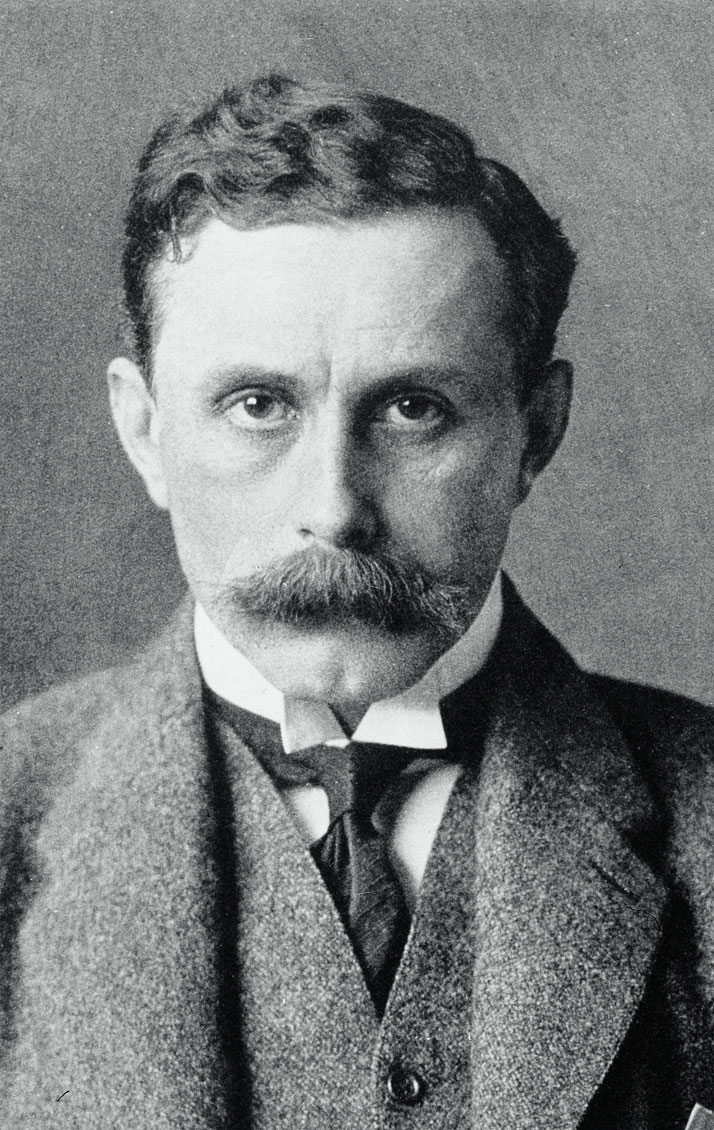
Many of you probably have never heard of Adolf Loos, as I have found many Czechs also have no idea who he is. However, Vendula gives tours at one of the houses, or vilas, he designed here in Prague and was the one who first enlightened me to his brilliance. He is one of the more important architects involved in the modernist movement. I will not go into too much detail here, as I do not want to be accused of blasphemy or falsifying information. I will leave that to my good friends at Arch Daily, so feel free to click here for more information on Loos.

Adolf Loos

Vila Müller, the residence designed by Loos in Prague
There were a total of three tours (spanning four interiors)...all in Czech. However, I hot the gist of what was said and most of the places also had information available in English. Trial by fire for my budding Czech. Needless to say, it was engulfed and burnt quite hot. The interiors of these places were absolutely amazing. Countless types of wood and colors of marble were prevalent, as well as myriad different doors, nooks, and drawers that you never would have imagined existing, let alone being so perfectly tailored to any possible need or whim of the inhabitants. Elegance married to essentials birth an exceptionally engineered essence in the Loos interiors. While I would live in any of them without hesitation, I'm sure (like all extravagant dwellings) it would end up getting old and would become a pain to maintain. It is worth noting that one of the Loos interiors is still inhabited by an individual (therefore privately owned) and is opened to the City of Plzeň for tours.

One of the Loos interiors, a second story flat, can be seen by its green window
trimming

View of the street from the inside

Dining room

Our guide was kind enough to unwittingly
pose for a secret photo (he must not have
heard how dangerous I am with a camera)

This is the toilet in the nearby bus station. One
of the Loos interiors was almost demolished
to make space for the station and, by
association, for this horrible excuse for a
bathroom

A small example of how Loos turns the daily
into the delightful
Brew-tiful beginnings

The tour of the Pilsner Urquell brewery was all in English and was also quite impressive, but in the massiveness of its production and the flamboyancy of its production and special effects. You could tell that it was this brewery's first rodeo. Their tour was tailored to tourism and was filled with special effects, hand-on elements, and photo-friendly features. We began at the production/packaging center and continued through the new brewery to the old brewery and finished the tour in the cellar, with a .5 L 'sample' of freshly-brewed beer. For more information on the brewery you can visit the official site.


The iconic old gate to the Pilser Urquell
brewery
Over the bridge and through the lot to
the Old Brewery we go...
The inner-working of the beast


The old water tower of the brewery 

Copper tanks used throughout the brewing process, meant to give this beer its unique color and taste

Good old Pavel Prucha...the man behind the Urquell magic in the year
of my birth
The underbelly

Samples of the old kegs (not in use today)
that held and transported the divine
substance
Well that's all for now, folks! If you want to get your liver involved in the experience/experiment you will be able to find Pilsner Urquell at your local liquor store most likely, as it is exported worldwide!


Friday, March 11, 2016

A Touchy Subject

One of the hottest issues in Europe, and a lot of the world (U.S. hugely included), is the so coined "refugee 'crisis". The Czech Republic is no different. Is no different in terms of the fact that immigration and refuge provision are hotly debated subjects in the country. Is quite different in the fact that the Czech Republic has one of the lowest rates of asylum in the European Union.

I realize that this is a very touchy subject, but I decided that many people (especially those reading from abroad) might be curious as to what the situation is like in the Czech Republic in the midst of such a huge period of upheaval. This being said, I do not claim to be an expert or definitive source on the subject, but I have spoken to many people of many ages and walks of life, being a teacher, and I thought I would share a little, general information about the tidbits I pick up.

The Czech Republic has one of the lowest rates of granted asylum in the European Union, and is greatly considered to be one of the less friendly countries to find yourself in as a refugee. There is little government support, almost no infrastructure, and the population generally adopts a cold stance towards these Islamic outsiders. There has been controversy with human rights groups and some media outlets who cite extended periods of detention in the Czech Republic as refugees attempt to head toward a more welcoming Germany. These stints of detention may often be unexplained, unnecessarily extended, or result in deportation back out of the EU without honoring refugee status. The perceived difference in culture is widely cited as the reason that the refugees "just wouldn't work here" and that "it would be different if it were a Ukrainian or someone of similar culture". 

By no means does everyone share the disposition above, but as a general rule it rings true. I teach many adults, and a lot of them will express dissatisfaction with any mention of refugee aide. In fact, Angela Merkel is now seen in a very unfavorable light by many as a result of her legislation and staunch support of granting asylum and establishing asylum quotas for each country (something that is currently a very debated topic in the EU). I also teach a lot of children and, sadly, they reflect and echo their parents' anti-refugee sentiments. One 12-year-old asked me, "What refugees?", to which I answered, "I think they are good. People need help. Do you agree?" He responded, "No, not refugee. Syria and Muslim no is good. Isis." It is true that most of the tension resides with harboring Syrian refugees, as that is the most blaring example of aide needed currently. 

Well, that is enough. I do not want this to be a lecture or opinionated column, simply a sharing of the general disposition of the country with those who may be interested. It is important to remember that the Czech Republic is by no means the bad guy here, as the U.S. has also more or less banned Syrian refugees from being granted asylum in many of its states. 

For more information check out this BBC article detailing various aspects of the current situation. 

Also, here is a video from TED.com that I found interesting and relevant. Brings up some interesting ideas and might be worth a watch:

https://www.ted.com/talks/alexander_betts_our_refugee_system_is_failing_here_s_how_we_can_fix_it