Monday, December 18, 2017

Does Santa Come to Mozambique?

Happy holidays! Here we are on the 18th of December and you would never know that any sort of huge holiday is a mere seven days away. This is something that has been a little tough in some ways, but extremely thought-provoking as well. I would like to share some of these thoughts and reflections with you this holiday season, not with the intent to evoke any sort of guilt or defensiveness by any means, only with the hope to provide some space for further examination, questioning and a reaffirmation and return to the true heart of the season, which as I have gotten older I have come to realize is love and family.

One of the starkest realizations that one comes to when going through the holiday season in a very poor country is the inconspicuousness of it. I am used to seeing lights on houses, signs in stores, trees in living rooms and people talking about the big date everywhere I go. That doesn't exist here. None of it does. Nor does Christmas candy. Or special promotions and sales. Or Christmas carols playing on the radio or in the stores. In fact, this period of time as the rainy season just is beginning is often referred to as the "hunger time" because all the stores of crops from the last season are running out and the new ones haven't had time to grow and be harvested. In a season that I am used to celebrating by adding extra stuff, I find a crushing lack of the basic stuff here. Money. Food. Even more lacking than it normally is.

This being said, when I went to the market today to give one of the vendors there back the 40 meticais he had lent me yesterday, he and his two friends were sharing a lunch of a fish sauce and xima and they demanded that I come eat with them. The food wasn't going to fill the three of them up as it was, but they wanted me to be a part of it. There is a shortage of food at the moment, but they wanted to share what they had. Money is hard to come by, but here was a free lunch being thrust at me. I ended up politely refusing and mentioning that I had already started cooking something at home (which was true), but it still took a lot of convincing before they let me go.

This is one small example from the hundreds I have accumulated during my first 8 months in Mozambique of the love and familial bonds which are so prevalent here. If love and family are what are truly important during the holiday season, then the Mozambicans celebrate all year round!

This brings us to my last point. The important things in life don't lie in the eye-catching, expensive or complex things, they lie in the simple things. The everyday things. And when you take away the possibility and means of surrounding yourself with these flashier things, the simple things are all you are left with. I may not have my family here with me, but the love that my Mozambican family here, all of it from the market vendors to hospital employees, goes a very long way in demonstrating the essence of the Christmas spirit, if you will, that I have found myself looking for since roughly December 1st.

I want to finish by saying that I am in no way trying to say our Western Christmas traditions are bad at all. Quite the opposite! I would love to be sitting on the warm rug in front of a wood stove drinking some hot cocoa with my parents and playing a game of Banana Grms. A Christmas tree would be one of the most beautiful sights at the moment. Gifts from Santa the morning of the 25th sound like a dream. What I am saying is that it's extremely important to know why all of these different parts of Christmas and its traditions mean so much to us. It's important to ask. Is it because of family? Is it because of love? I think we will find that the vast majority of what we enjoy about the season will fall into one of these two categories. And THAT's the beautiful thing, to be able to slow down, set aside the distractions and the extra and to be able to take a moment to really and truly appreciate Christmas for what it is: a time filled with family, those closest to us and the incredible amount of love that bonds all of us together and makes it all worthwhile!

On that note, merry final days and enjoy the season; I know that I will be!

Maybe the closest thing to a Christmas tree I'll see during my time here in Mozambique, this
giant Baobab tree leaves quite the impression! 

Tuesday, December 5, 2017

Horizon Points - The Art of Capturing

Horizon points are arguably some of the most magnetic visions we experience on the day-to-day, always seeming to draw us in by a magnificent sunset, mountains in a distant fog or waves slowly lapping on the beach far away. That being said, we never actually arrive at them; there is always another horizon waiting when we get to the point we had earlier seen. This is one of the beautiful things about running here for me. Driving, taking a train and other means of transportation are great ways to chase the horizon, but running is an unmatched way to appreciate it.

The obvious reason for this (at least in my case) is that you are going so slow you have plenty of time to take in the same horizons as you slowly move within them. I shouldn't say "the same", because the other incredible thing about running is you are able to witness the horizons change with the lighting, days, seasons and weather. Metoro is situated in a more or less flat area of land, but to the north the elevation does go down enough to get a breathtaking view of the expansiveness of some of the Mozambican mato (bush). We have one mountain (term must be taken with a grain of salt) visible in the distance to the north and three mountains off a ways to the south. The rest is flat. What this translates into is a lot of visibility on my runs.

As you might already know, I am currently training for a marathon at Victoria Falls in July. I try to get out and run every other day. After roughly four months I am up to 12.5 kilometers, which means I'm able to get some good range on my routes. I was worried that the scenery would get boring, as my 'routes' are in fact just down and backs on a highway, but I have been pleasantly surprised by how organic and dynamic they have turned out. Here are some of the beautiful things I experience and see while I'm out there:

Smiling, waving, greeting residents on their front porches or at the wells for the first couple kilometers of my run as I slowly leave the limits of Metoro's housing. Little armies of goats crossing the road to get home. The mesmerizing glow of burning machamba (field for farming)-cleaning fires blazing off in the distance at dusk. The smell of dusty earth that has drank its fill of a recent rain. The cool drizzle of running in the rain as a giant, red sun sets in the west. Cicadas. The rustling wind through the bushes alongside the road, sliding the leaves and branches together. Women carrying large capulana (cloth) sacks full of mandioca (cassava), charcoal or bread on their heads to sell in Metoro. Men balancing tens of long, thin bamboo stalks on ancient bicycles as they creak their way into town. Many types of birds singing their unique songs to each other as the light begins to fade away. The pregnant first moments of a sunrise at 4.15 in the morning as the sky slowly begins to blush in the east. Shadows caused by the full moon. The whole expanse around Metoro leaving the brown, dry, desolation and unwrapping into a green paradise pulsing with new life and energy. Inter-city chapas (vans converted for public transport) whirring by with incomprehensible loads of baggage piled and tied onto their roofs. Stars escaping from the Milky Way and scattering into the night. A soft, humidity in the morning after a light rain the night before. Mango tree branches bowing with the weight of hundreds of dense green fruits as they begin to ripen. Acacia and Baobab trees towering over other flora in the distance while looking off to the side of the road. Three mountains climbing up from the horizon, towering over the rest of the flat, stretching landscape. A cool, flowing breeze over my face as I move towards the east and the Indian Ocean resting 88 kilometers away. A road that unravels ahead of me, twisting and turning, urging me to tack just one more kilometer onto my route today to explore around the next bend. The quiet, empty stillness of the night. The gentle, rolling waking of the world in the early morning. Serene silence with the only the tempo of your breath to guide your thoughts.

These are just a handful of the reasons to run here in Metoro, as if the idea of running a marathon around one of the Seven Natural Wonders of the World next year weren't enough for motivation! Now, time to get to bed, as tomorrow I plan on trying to go for an early morning (4AM) run.


Wednesday, November 1, 2017

Money Makes the World Go 'Round

This post will be a quick one, just to share an impactful event that happened to me this week. Many times I think we know truths about the world or our environment, but we don't dedicate the time to actually utter them, then when someone actually does and we hear it, it comes as a little bit of a shock or surprise. Not in the way that it doesn't make sense or that we don't believe it, but in the way that we until that moment didn't quite realize exactly HOW much sense it made or didn't pinpoint the countless experiential evidences that lead us to know it is true. This happened to me this past Tuesday.

I've been waiting for about two weeks now to get electricity in my house and I am now beginning to actively call one of the people responsible for the area operations a couple times a day in an effort to annoy him into motion. However, when one of the nurses at the hospital overheard my conversation with an individual from the energy company she asked after I was done, "Was that about getting energy?" I responded, "Yes, I've been waiting two weeks so far." "Epá, energy, that can take months...just for them to show up." "But..." I started, before she cut me off, "Sabe, Zachy, o dineiro... (You know, Zach, money...)" She didn't have to finish her sentence. We all know how it ends. Money makes the world go around. Money speaks. Money is power. And a hundred other phrases to let you know that if you don't have the green, you won't be seen.

But I realized we don't know. We have no idea. Until you live in a country where money effectively doesn't exist for the majority of the population (and, if I'm honest with myself, until you are one of these individuals), you can't truly appreciate what any of these sayings mean. The nurse was right, money runs Mozambique. Rural citizens don't have it. Foreign companies take advantage of the nation to make it. International aid organizations and governments pump it into the country in order to try to advance their agendas. Individuals leave the country to find it. Children ask for it before they even know how to count it. Parents work their entire lives and never have enough of it to save up. People kill for it and people pray for it. Money.

This is not meant to be a discouraging post, only meant to make us think a bit. We talk about money all the time in the U.S., for example, and how those with the money have the power. This is just as true there as it is here, but here that reality manifests itself in a much more extreme and raw way. It's all a spectrum and it's easy to gape at those above us, but let's not forget those below us either.

The night after this happened, I was able to go on a gorgeous moonlit jog, the incredible beauty and freshness of the night reminding me that money is certainly not the only thing that matters in this world. Neither is electricity. I can wait. It can wait.

Late afternoon sun from the highway south of Metoro

Thursday, October 19, 2017

Those Who Wander are Not Always Lost

"Passear" doesn't really have a good one-to-one English translation. If you were to search in a translator you would get the verbs "to stroll", "to walk" and "to saunter", to name a few; none of these fully embody the full sense of the word. To be honest, if you were to ask a Mozambican what "passear" meant, they would likely move their hand in an large, open sweeping motion and respond with, "Epa, é passear só!" (Ay, it's just passearing!) As this is not a very functional definition for any of you not in Mozambique reading this, let's try to peg this down.

Passear (v.) - to wander around one's neighborhood or town with or without a predetermined destination and with the continual objective of encountering known, and possibly unknown, individuals in order to share some form of social interaction with them

This general description aside, there really are no rules to passear-ing, simply a few guidlines. Here are some of the non-rules you must know and hints that might help before your first passearing:

  • One doesn't need to give an individual forewarning before showing up at their residence, a simple "com licença" (with permission) upon reaching the gate, yard or front door will do.
  • One doesn't need to explain to anyone why one is there, it's enough to know it's a routine passear.
  • One needn't divulge any route plans or destination to anyone who might greet one along the way. "Estou a passear" tells them everything they need to know.
  • However, once one assumes a passear-ing status, one opens oneself to any social interaction that might come one's way and is now obliged to entertain, at least briefly, any conversation or story that might come one's way. There is no such thing as selective passear-ing.
  • There is no amount of time that a passear-er must spend at any given location, the mere state of passear-ing liberates them from the flow of time as we know it.
  • If one has passear-ed to an individuals house, it is important to know that one's house is now 'on the grid' and is fair game as a destination the next time this individual passear-s.
  • Elderly are especially tickled by a passear their way. It is always a fantastic idea for one to make the houses of any elderly community members they may know a destination of one's passear-ing every now and again
  • One must not passear com pressa. Passearing is by its very nature a relaxed and free-flowing activity. To attempt to try to limit or contain such a thing at worst results in an unfathomable disaster and at best leads to a very awkward, unnatural passear. 
  • If one means to passear somewhere during mealtime, it is very likely one will encounter a "servido!" ("served", with regards to offering food) thrown your way upon arrival. For this reason, it is often kind to passear with a small consumable gift to add to any meal or present to the family if one's arrival coincides with a meal. 
I hope that this will be of some help upon your next visit to Mozambique as you stroll right into the passear-ing culture. Passear-ing can seem complex, ambiguous and hard to understand at first...and it is! However, far from being the result of something that is difficult, this is because passear-ing is so fluid and natural; it's hard to tack down with rules and descriptions. In the end, the most important thing to remember is to walk slow, go with the flow and say greet everyone you may or may not know!

It's ALWAYS a good idea to passear by mãe's house!


Tuesday, October 10, 2017

A Vida Está a Andar

Well, when you wait a month to write a blog post, you realize that quite a lot is happening in this supposedly slow-paced life that you are leading in Cabo Delgado, Mozambique. That being said, I think the best way to go about this post is to shotgun a bunch on information and photos about what all has gone on this past month and wait until later for a more focused, specifically-themed post.

And here we go...

I finally have my own house, but am still living off of the benevolence of my mother, who insists on feeding me. I obviously have no complaints when it comes to this issue, as her food is heavenly and I am without electricity as I wait for a box to be installed.

A group of 30 armed militants recently took over a couple towns in the north of Cabo Delgado, killing police and stealing arms. At first it was suspected that they might be members of Al Shabaab, but upon further investigation it is unclear and seems that, regardless of anything, they were Mozambican. The situation has been cleared up, but Peace Corps will likely be moving the two volunteers that were in the site.

I went to Nampula to visit the Acting Global Director of the Peace Corps, Sheila Crowley. As an added treat, the Africa director and Mozambique director were also present. It was a very brief meeting, but was great to take advantage of the opportunity to meet someone so high on the ladder, as field visits are not very common. It was also awesome to meet up with other volunteers in Nampula and spend some time in the 'big city',

I am now working with a group called Geração Biz, which is a group of peer educators at the local school. I am helping reinforce their knowledge of various themes regarding sexual health and HIV/AIDS by meeting with them once a week to do some activities, chat and answers any questions I might be able to give insight on. It's a really cool program and I'm excited to see them in action!

At SAAJ (the youth center of the hospital) we are in the beginning phase of planning a garden for the youth here to grow produce, have the opportunity to supplement their diet with it and possibly also have a chance to sell it for a little extra income.

I have had my first English for Emakhua language lesson exchange. The pedagogical director at the school expressed an interest in learning English, and I need to learn local language, so we have begun swapping lessons. Brings me back to the good 'ol days of teacherhood in Prague!

I found a snake on my door this week. It escaped into a tree that directly overhangs my walkway, which is semi-terrifying, as it looks EXACTLY like a branch except for its green head. After some research I believe it could be mildly venomous. Hopefully we don't find out.

The provincial English Theater competition took place in Pemba, or actually a lodge outside of Pemba. It was great to see youth from schools all over the province come to compete in short 10-minute theater performances themed around health and self-empowerment. The main theme was equality and that different isn't bad, a theme which is especially important in the realm of HIV and the stigma that often accompanies it. Almost the entire Cabo Delgado volunteer group was there and it was great to reunite with Liz, Elissa, Camila and Isabella!

My jogging routine is still going strong and I was recently inspired by my sister, Mackenzie, to push my distance up to a normal length of between 8-10km, which I believe is on track for the marathon that I am planning on running July 1st at Victoria Falls. The only kicker is that my site is fairly flat and I have been running in the evenings when it is cool. I don't think either of these conditions will be the case during the actual marathon.

Yesterday I had my first official Site Visit by the Peace Corps. I believe everything went well and the representative was impressed with the town of Metoro and my presence within it up until this point.

Victor, a vendor in the market, invited me to attend their soccer practice at 4a.m. the next morning. I decided to check it out (ends up that it starts closer to 5) and now it seems I have somehow committed to the entire season? I get heckled every day that I miss practice and Victor keeps reminding me that we have a game coming up this Saturday that I had no idea I was a part of.

There is no water in my housing complex, so I cart water from the hospital back to the house, where I have two 100L buckets: one for the kitchen and one for the bathroom. This used to be a more difficult task, as it was done by hand carrying two 25L containers, but now that I have a wheelbarrow I can fill the bucket in either of the rooms with a single trip.

Well, that is already quite a bit of information and I'm sure if you've made it to this point in the post you're ready for some photos!

Ben and me just being Ben and me

The water transport (yellow) and storage system. Each galão (yellow) holds roughly 20-25 liters and the bucket 100

Sunset from a hill in Ancuabe sede, the town closest to me

View from the same hill before sunset
Dannia, Joel and me enjoying the view after a short walk out of Ancuabe sede

Whenever we do buscas, which consist of going into the small towns and bush to find patients who have abandoned treatment, we always return with all sorts of gifts... Almost always edible

Mandioca, or cassava, is huge here and I like it a lot. However, in this dry form it ends up tasting a lot like chalk. Sometimes it is necessary for a mid-busca snack though

The centipede can get fairly gigantic here. However, I've been told they are harmless and it's the venomous millipedes that you want to watch out for

During the English Theater competition we camped out.

Everyone gathered for the competition

Sunrise over the ocean in Pemba

Infiltrator of my room one night

The foundation Ariel Glaser shot a short documentary on being HIV positive in the community

Sitting down and meeting all the big wigs of Peace Corps in Nampula during their visit before continuing to Maputo

In Nampula Michelle found an awesome couch surfing host named Mwaura! He is from Kenya and it was fantastic to get to know him and share some great conversations

Uncle Paul would be proud of me... Bought some DIY necessities and have already begun some small home improvements


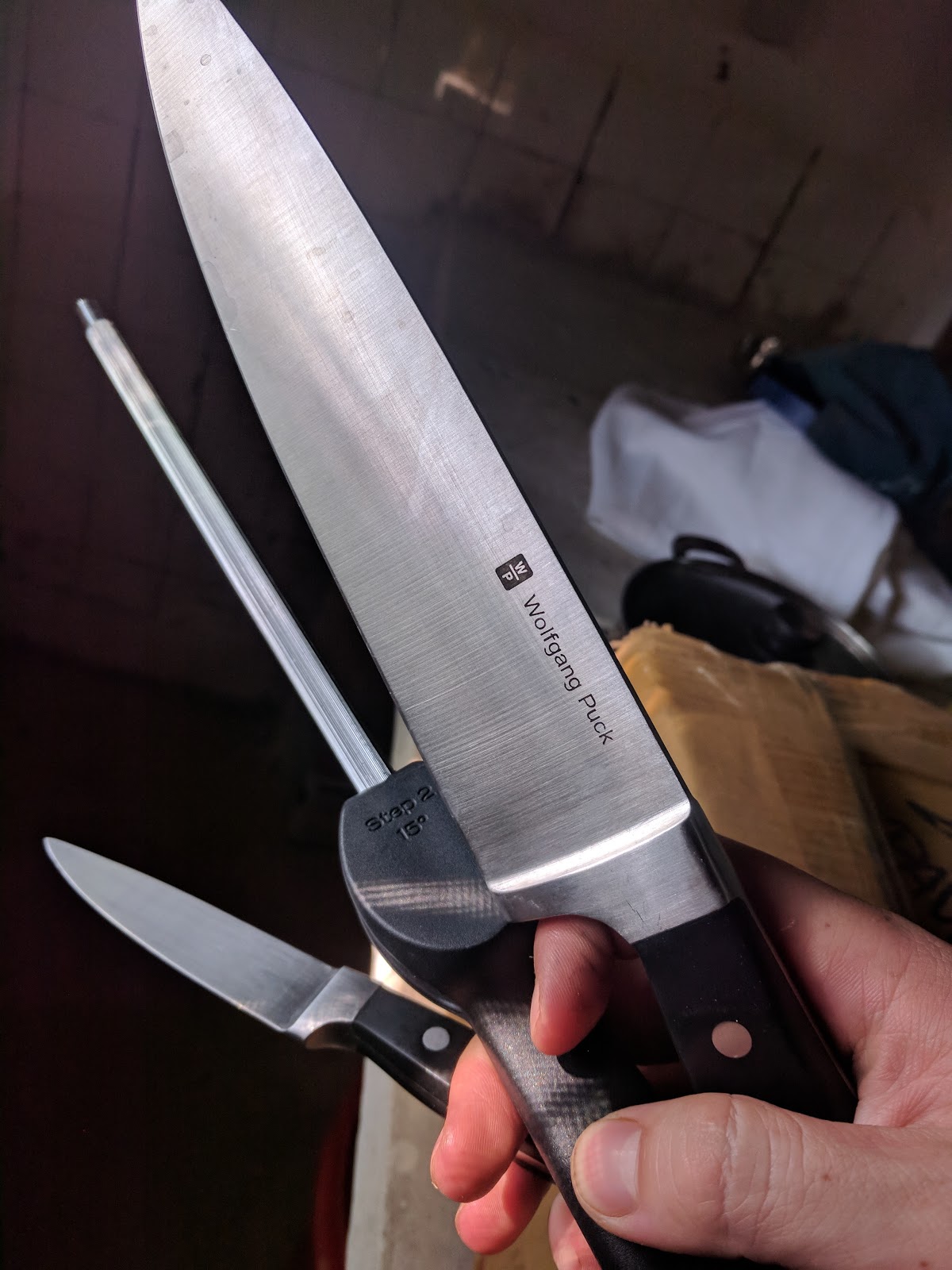
One of the most exciting things to finally be using are my knives... So sharp and so efficient! Never to be taken for granted again.

Camila and Ben breakfasting at the lodge in Pemba where we had a meeting with the Ariel Glaser foundation.

Isa and me after finishing a morning run on the beach
We had a nice Cabo family dinner during our time there for the Ariel Glaser meeting

A district gathering of all of the members of the Geração Biz team, taking place at the school in Ancuabe sede

The snake that greeted me a couple mornings ago